
By farmers, for farmers
Where to buy ube planting materials
Philippine Ube supplies verified ube planting materials to Philippine growers. Every sett is cut from tubers that made our export grade, released under a named variety, traced to the farm that grew it, and checked under the Philippine Ube Co. Protocol before it leaves.
The material comes from Filipino farms growing for export, and it goes to Filipino farms planting their next crop.
The crop starts in the sett
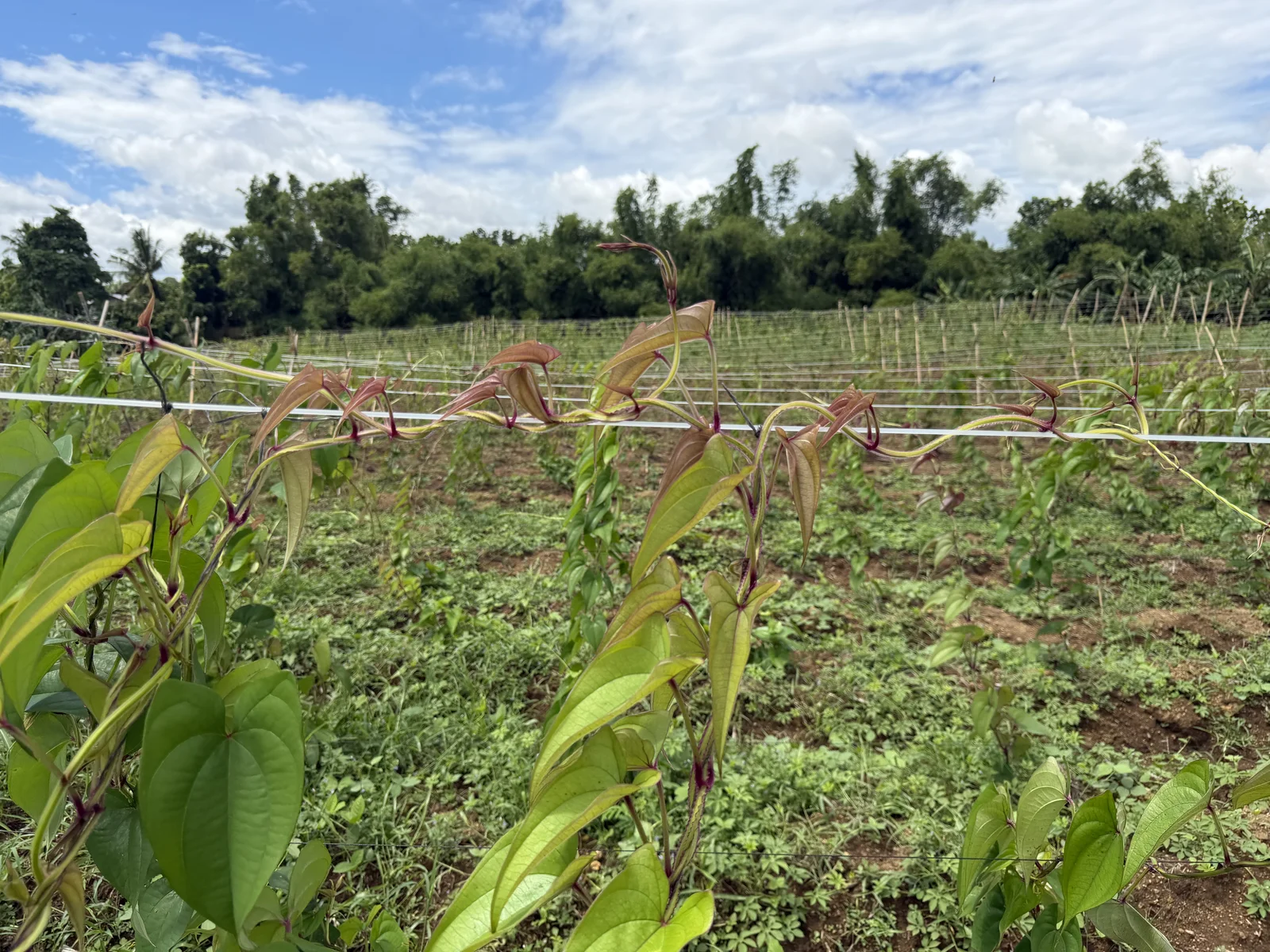
Ube is grown from pieces of last season's tuber, called setts. There are other ways to propagate it, but setts are how most of the country plants. Each one grows into a copy of its parent. Whatever the parent tuber carried, the next crop carries too: its variety, its vigour, and any rot or pest it brought with it.
That makes planting material the one input you cannot fix later. Fertiliser, water and trellising can all be adjusted mid-season. The sett you plant in May is the plant you harvest in March. Planting material shortages are one of the main reasons national production has fallen, and our farmgate price and production data shows how far.
The Philippine Ube Co. Protocol
Verified means four checks, passed in order, before any lot is released for planting.
- 1
The variety is named
Every lot is released under a variety name. You know what you are planting before it goes in the ground, and so does whoever buys your harvest.
- 2
The parent tubers made export grade
Setts are cut only from lots that passed the same grade we apply to ube we ship abroad: harvested at maturity, sound, and consistent across the lot.
- 3
Traced to the farm that grew it
Each lot is recorded against the farm and province it came from. If a planting does well, you can go back to the same source next season.
- 4
Checked before it leaves
Material is inspected before release. Anything soft, rotting, damaged or carrying pests stays behind, because a sett passes whatever it carries to the whole planting.
The tolerances behind each check are written into our supply agreements rather than published here, the same way we handle the grade we buy harvest against.
Four places to get ube planting materials
Each one suits a different grower. The difference is how much you know about what you are planting.
Your own harvest
Hold back tubers at harvest and cut them into setts for the next season.
- Suits
- Growers happy with what they already grow.
- Worth knowing
- It costs the sale of every kilo held back, and any weakness in the parent crop carries straight into the next one.
A neighbour or the local market
Buy tubers from another grower or a palengke and plant them.
- Suits
- Small plots and quick starts.
- Worth knowing
- The variety and the farm of origin are often unknown, and market tubers were chosen for eating, not for planting.
Government and research stations
DA-BPI and state university root crop centres such as PhilRootcrops at Visayas State University propagate named cultivars.
- Suits
- Growers who can wait for a programme allocation.
- Worth knowing
- Clean, documented material, produced in volumes far smaller than what farmers ask for.
A verified supplier
Buy setts that have been graded, named and traced before sale. This is what we are.
- Suits
- Growers planting for a buyer who will ask what variety it is.
- Worth knowing
- You pay for planting material in cash rather than in held-back harvest, and supply is set by what our partner farms lift each season.
Start with a trial plot
You do not need to plant a hectare to find out whether ube suits your land. Plant a small area for one season first. It shows you how the variety handles your soil, your slope and your rainfall, and what yield you actually get, before you commit the land, the labour and the planting material for a full hectare.
| Area | Setts at the DA rate | Full setts, 100 to 150 g | Minisetts, about 35 g |
|---|---|---|---|
| 500 m² | about 1,000 | 100 to 150 kg | about 35 kg |
| 1,000 m² (0.1 ha) | about 2,000 | 200 to 300 kg | about 70 kg |
| 2,500 m² (0.25 ha) | about 5,000 | 500 to 750 kg | about 175 kg |
| 1 hectare | about 20,000 | 2,000 to 3,000 kg | about 700 kg |
Based on 20,000 setts per hectare from the DA Region 02 Ubi Production Guide (2012). Full setts at 100 to 150 grams each, minisetts at about 35 grams each.
How much you need
The Department of Agriculture Region 02 Ubi Production Guide (2012) puts it at 20,000 to 27,778 setts per hectare. At 100 to 150 grams a sett, 20,000 setts is 2 to 3 tonnes of planting material. As minisetts of about 35 grams, the same 20,000 is about 700 kg. We plant close to the DA guide on our own land and change spacing only where the ground calls for it, such as steep or unusually hilly terrain.
Size it for your own landWhen to order
Ube goes in at the start of the wet season, usually May to June, and every grower in the province wants material in the same weeks. Order ahead of your planting month. The planting month also sets your harvest month, so it is worth choosing with the selling season in mind.
By farmers, for farmers
We farm ube ourselves in Lobo, Batangas, and we buy it from partner farms and cooperatives across the country. The planting material we supply comes out of that same network: tubers grown by Filipino farmers to the grade overseas buyers ask for.
Selling it back into the farming community is the point. A grower who starts with a named, export-grade variety can tell a buyer exactly what they are growing.
Frequently asked
Where can I buy ube planting materials in the Philippines?
There are four realistic sources: tubers held back from your own harvest, tubers bought from a neighbour or a local market, government and research stations such as DA-BPI and PhilRootcrops at Visayas State University, and verified suppliers. Philippine Ube supplies verified planting materials cut from export-grade tubers grown by Philippine farmers, with the variety named and the farm of origin recorded.
Can I grow ube from seed?
Ube is planted from pieces of last season's tuber, called setts. There are other propagation methods, but setts are how most Philippine growers plant. When people search for ube seeds or ube seedlings, setts are what they need. Each sett grows into a plant of the same variety as the tuber it was cut from.
What sizes of ube setts do you supply?
We work with two sizes: full setts of around 100 to 150 grams, and minisetts of around 35 grams. Both are pieces of the same export-grade tuber. Minisetts take far less tuber to plant the same area, about 700 kg a hectare at the DA rate against 2 to 3 tonnes for full setts.
What is the Philippine Ube Co. Protocol?
It is the set of checks our planting material passes before release: the variety is named, the parent tubers made our export grade, the lot is traced to the farm and province that grew it, and the material is inspected for rot, damage and pests. The tolerances behind each check are set in our supply agreements.
How much ube planting material do I need per hectare?
The Department of Agriculture Region 02 Ubi Production Guide (2012) puts it at 20,000 to 27,778 setts per hectare. Full setts usually weigh 100 to 150 grams, so 20,000 setts is 2,000 to 3,000 kg of planting material. As minisetts of about 35 grams, the same 20,000 is about 700 kg. We plant close to the DA guide on our own land and change spacing only where the ground calls for it, such as steep or unusually hilly terrain.
Can I start with a small planting first?
Yes, and for a first season it is the sensible way to start. A 1,000 square metre trial plot, a tenth of a hectare, takes about 2,000 setts at the DA rate, which is 200 to 300 kg as full setts or about 70 kg as minisetts. One season shows you how the variety does on your soil, your slope and your rainfall before you commit a full hectare.
When should I order ube planting materials?
Order before you plant, not when you plant. Ube goes in at the onset of the wet season, typically May to June, and every grower in the province wants material in the same weeks. Tell us your planting month early so we can plan supply around it.
Which ube varieties can I buy as planting material?
It depends on what our partner farms lift in the season. Every lot is released under a variety name, so you choose knowing what you are getting. Growers report that Kinampay does not reliably keep its colour and flavour outside Bohol, which is worth weighing if you farm elsewhere.
How much do ube planting materials cost?
Planting material is priced per kilo and quoted per order, because the price moves with variety, season and volume. Send us your province, area and planting month and we come back with a quote.
Will you buy my harvest if I plant your material?
We buy ube directly from Philippine farms and cooperatives. Growers who plant a named, verified variety are in a stronger position with any buyer, including us. Supplying planting material and buying the harvest are separate agreements, and our sell-ube page explains how buying works.
Saan makakabili ng pananim o binhi ng ube?
Ang Philippine Ube ay nagbebenta ng beripikadong pananim na ube: mga piraso ng tuber mula sa export-grade na ani ng mga magsasakang Pilipino, may pangalan ang barayti at alam kung saang bukid galing. Sabihin sa amin ang inyong probinsya, laki ng lupa at buwan ng pagtatanim.
Growing ube for the first time? How ube is grown covers the full cycle, and the ube varieties guide compares the cultivars.
Request planting materials
Tell us about your planting and we come back with availability and a quote. A trial plot is a normal first order. It helps to include:
- Your province and municipality
- Area to plant, and your spacing if you know it
- The variety you want, or what you grow now
- Your planned planting month
The short facts
- Farm location
- Lobo, Batangas, Philippines
- What we supply
- Ube powder (two grades) and frozen ube, all Dioscorea alata
- Shelf life
- Powder: 24 months sealed, cool and dry
- Certifications
- FDA Philippines (LTO) registered, Halal certified
- License mark
- Tatak Ube, a license mark we issue for genuine Dioscorea alata
- Ships to
- United States, Canada, Europe, Australia, New Zealand and worldwide
- Contact
- enquiries@philippineube.com
Composition figures are sourced to DOST-FNRI on the nutrition page. Allergen and dietary declarations are on the allergen statement. Production and area figures come from PSA OpenSTAT, cited where used.