A Complete History of Ube in the Philippines: Pre-Colonial to Present
By Philippine Ube
Ube did not become a Filipino staple overnight. Its history spans thousands of years, from the Austronesian migrations that brought Dioscorea alata to the Philippine archipelago, through centuries of colonial transformation, to the Instagram-era explosion that made purple yam a global sensation.
Understanding this history matters. When a product with millennia of cultural significance becomes a "trend," something important gets lost. This is the full story.
Pre-colonial era (before 1565): the Austronesian roots
Dioscorea alata, the greater yam, is believed to have originated in mainland Southeast Asia, possibly in the region spanning modern-day Myanmar, Thailand, and Vietnam. Austronesian peoples, the seafaring ancestors of Filipinos, Polynesians, and Malagasy, carried yam cultivars across the Pacific and Indian Oceans as part of their migration toolkit, alongside taro, breadfruit, and coconut.
Archaeological and ethnobotanical evidence suggests Dioscorea alata was cultivated in the Philippine archipelago for at least 2,000–3,000 years before European contact. The historian William Henry Scott, in his surveys of pre-colonial Philippine society, documented yam cultivation as a fundamental part of the agricultural systems of Visayan and Tagalog communities.
In pre-colonial Philippine society, root crops including ube served as dietary staples alongside rice. Ube's role was not decorative; it was caloric sustenance. The purple tuber was boiled, roasted, or pounded and eaten as a primary carbohydrate source, particularly in upland areas where wet-rice agriculture was impractical.
Spanish colonial period (1565–1898): fiesta integration
The Spanish colonial period transformed Philippine food culture by introducing dairy products (milk, butter, cheese), sugar refining, and Catholic feast traditions. These ingredients and traditions converged with indigenous ube cultivation to produce what we now recognize as ube halaya.
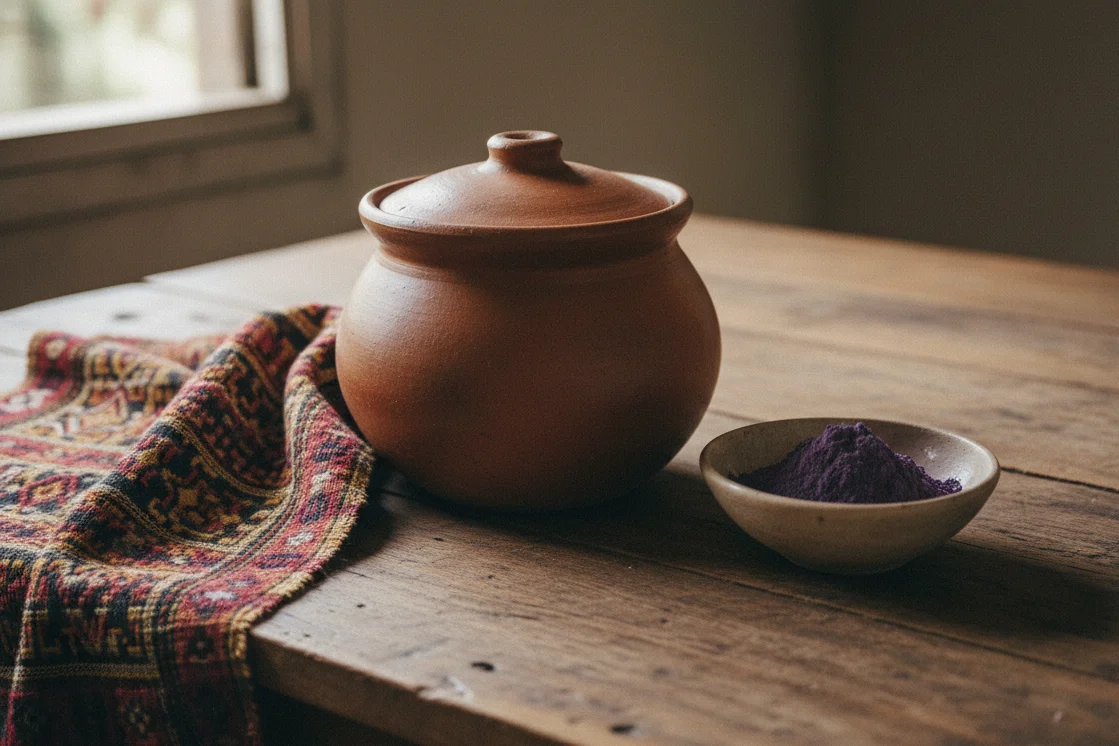
The earliest documented forms of ube halaya (grated ube cooked slowly with coconut milk and sugar) likely emerged during this period as a fiesta food. The process of cooking ube into a sweetened jam parallels the Spanish tradition of fruit preserves and dulce preparations. The addition of condensed milk (arriving later, in the late 19th century) and butter transformed halaya into the rich, creamy dessert we know today.
Ube also became associated with the Catholic liturgical calendar. Purple, the color of Lent and Advent, gave ube desserts a natural association with religious observance. Ube halaya became a fixture of Filipino fiestas, Christmas Noche Buena, and Holy Week celebrations.
American period and early independence (1898–1960s)
The American colonial period (1898–1946) brought institutional agriculture to the Philippines. The Bureau of Plant Industry (BPI), established in 1929, began systematic documentation of Philippine crop varieties, including Dioscorea species. This period also saw the introduction of commercial food processing concepts, though ube processing remained largely artisanal.
Post-independence, as the Philippine economy modernized, ube halaya became increasingly commercialized. Small-scale producers, particularly in the Visayas (Bohol) and other provinces, began producing halaya for local markets beyond their immediate communities. The product remained regional, however, a specialty of certain provinces rather than a nationwide industry.
The halaya golden age (1960s–2000s)
From the 1960s through the early 2000s, ube halaya solidified its position as the Philippines' signature purple dessert. Key developments:
- 1960s–1970s: Good Shepherd brand from Baguio popularizes packaged ube halaya as a pasalubong (souvenir/gift) item, making it a tourism product
- 1970s–1980s: Ube ice cream becomes standard in Philippine ice cream parlors, particularly through brands like Selecta and Magnolia
- 1980s–1990s: Filipino diaspora communities (particularly in the US, Middle East, and Hong Kong) create demand for imported ube products, establishing the first international supply chains
- 1990s–2000s: Filipino bakeries in Los Angeles, New York, and the Bay Area introduce ube pandesal, ube ensaymada, and ube cake to American neighborhoods with significant Filipino populations
During this entire period, ube remained almost exclusively a Filipino product. Western food media had virtually no awareness of it. The global "discovery" was still years away.
The Instagram era and global discovery (2010–2020)
The convergence of several factors turned ube from a Filipino heritage food into a global phenomenon:
2012–2015: Instagram's rise as a food photography platform created demand for visually striking, "photogenic" foods. Ube's vivid purple color made it inherently shareable. Filipino-American food creators began posting ube content that went viral beyond Filipino audiences.
2016–2018: Major food publications (Bon Appétit, Food & Wine, Eater) published features on ube, introducing it to mainstream American food culture. Manila Social Club in Brooklyn created a $100 gold-flaked ube donut that generated massive media coverage.
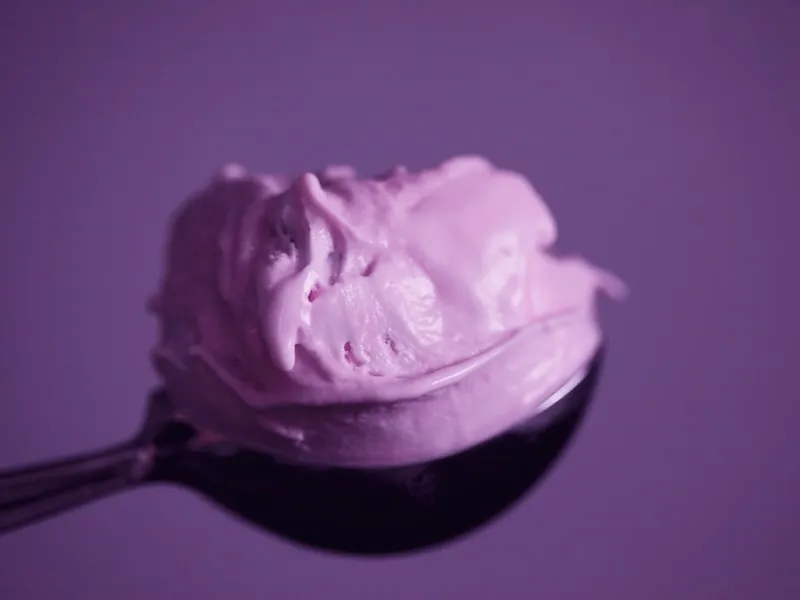
2019: Trader Joe's launched ube ice cream, the first mass-market retail ube product in the United States. This was the inflection point: ube moved from specialty to mainstream. Trader Joe's ube mochi ice cream followed in 2021, cementing the category.
2020: The COVID-19 pandemic triggered the ube pandesal phenomenon in the Philippines, with bakeries across Metro Manila selling millions of ube cheese pandesal as a comfort food.
The present crisis (2020–2026)
The cruel irony of ube's global popularity is that it has coincided with a 50% decline in Philippine ube production. While the world's appetite for ube has exploded (the global market projected to reach US$943 million by 2035), the Philippines' capacity to supply authentic ube has shrunk.
Production fell from 30,074 metric tons in 2006 to under 14,000 MT by 2024. The causes are systemic: a planting material crisis, aging farmers, climate vulnerability, and government neglect.
Meanwhile, much of what the world consumes as "ube" is not ube at all. It is purple sweet potato (Ipomoea batatas) grown in other countries, artificially colored, or synthetically flavored. The cultural appropriation debate has intensified as Filipino Americans watch their heritage food become commodified without credit or economic benefit flowing back to Philippine farmers.
Timeline: key dates in Philippine ube history
| Period | Event |
|---|---|
| ~3000 BCE | Austronesian peoples bring Dioscorea alata to the Philippine archipelago |
| Pre-1565 | Ube cultivated as dietary staple across Visayas and Luzon |
| 1565–1898 | Spanish colonial influence creates ube halaya through fusion with dairy and sugar |
| 1929 | Bureau of Plant Industry established, begins documenting ube varieties |
| 1960s | Good Shepherd popularizes packaged ube halaya as pasalubong |
| 1980s | Filipino diaspora creates first international ube supply chains |
| 2006 | Philippine ube production peaks at 30,074 MT |
| 2016 | Manila Social Club's $100 ube donut goes viral |
| 2019 | Trader Joe's launches ube ice cream in the US |
| 2020 | Pandemic ube pandesal phenomenon sweeps the Philippines |
| 2025 | Philippine yam/tuber exports (including ube) estimated at approximately US$3 million, roughly doubling year-over-year |
Sources
- William Henry Scott: Ethnobotanical records of pre-colonial Philippine agriculture
- PCARRD (Philippine Council for Agriculture, Aquatic and Natural Resources Research and Development): Historical surveys of Philippine crop cultivation
- UP Los Banos: Research on Dioscorea species in the Philippines
- PSA (Philippine Statistics Authority): Production data, OpenSTAT
Frequently Asked Questions
When did ube become popular?
Ube has been a staple food in the Philippines for thousands of years. It became popular globally around 2016–2019, driven by Instagram food photography and mainstream product launches like Trader Joe's ube ice cream. The 2020 pandemic ube pandesal trend amplified awareness further.
Is ube indigenous to the Philippines?
Dioscorea alata (ube) is believed to have originated in mainland Southeast Asia. Austronesian peoples brought it to the Philippines approximately 3,000–5,000 years ago. While not strictly indigenous, ube has been cultivated in the Philippines for millennia and is deeply embedded in Filipino food culture.
What is the oldest known ube recipe?
The oldest recognizable ube preparation in the Philippines is simple boiled or roasted ube, consumed as a staple carbohydrate since pre-colonial times. Ube halaya as we know it (cooked with coconut milk, sugar, and later dairy) likely emerged during the Spanish colonial period (1565–1898).