
How to Import Ube into South Korea: MFDS Compliance Guide
A step-by-step guide for Korean traders and food manufacturers importing Philippine purple yam
By Philippine Ube
South Korea is one of the fastest-growing markets for Philippine ube. Korean bakeries, snack manufacturers, ice cream brands, and cafes are sourcing ube powder, fresh ube, and ube paste as a premium ingredient. But importing food into Korea requires navigating the Ministry of Food and Drug Safety (MFDS) — one of the world's most thorough food safety regimes.
This guide covers what Korean importers need to know about bringing Philippine ube into South Korea, from facility registration to port clearance.
Step 1: Register as a food importer
Before importing any food product into Korea, you must register your business with the regional office of the Food and Drug Safety (FDS). This is a one-time registration that covers your import business. You'll need a valid business license and documentation confirming your food handling capabilities.
If you're using a customs broker or trading company, confirm they hold the necessary food import registration. Many Korean trading companies are already registered and can handle the import declaration process on your behalf.
Step 2: Overseas facility registration
Under the Special Act on Imported Food Safety Control, overseas food manufacturing or processing facilities must be registered with MFDS at least seven days before the first import declaration. This means the Philippine facility producing the ube must be registered before your first shipment clears Korean customs.
Philippine Ube's processing facilities are registered with MFDS. If you're sourcing from us, this step is already handled. We provide all facility registration details needed for your import application.
Step 3: Understand the MFDS inspection process
MFDS applies four types of inspection to imported food products:
- Document inspection (서류검사): Review of import documents only. The fastest clearance path, typically applied to products with established import history and a clean compliance record.
- On-site inspection (현장검사): Document review plus sensory testing at the port. Inspectors check appearance, odor, and packaging integrity.
- Thorough inspection (정밀검사): The most comprehensive inspection. Includes laboratory analysis for microbiological contamination, heavy metals, pesticide residues, and food additives. First-time imports of a new product almost always undergo thorough inspection. Expect 7–15 business days for laboratory results.
- Random sampling inspection (무작위표본검사): Random selection from routine shipments for laboratory testing. Applied to products with established import history.
For your first ube import into Korea, expect a thorough inspection. We provide certificates of analysis with every shipment — including microbiological testing, heavy metal screening, and moisture content — which helps facilitate faster laboratory clearance.
Step 4: Prepare the documentation package
Every ube shipment to Korea requires the following export-side documents:
- Phytosanitary certificate: Issued by the Philippine Bureau of Plant Industry. Confirms the product is free from pests and diseases. Required for all plant-based food products entering Korea.
- Certificate of origin: Confirms the ube was produced in the Philippines. Important for customs tariff classification under the Korea-ASEAN Free Trade Agreement (AKFTA).
- Certificate of analysis: Laboratory test results covering microbiological counts, heavy metals (lead, cadmium, arsenic, mercury), moisture content, and any relevant residue testing.
- Commercial invoice and packing list: Standard trade documents with product descriptions, quantities, weights, and values.
- Bill of lading: Shipping document from the carrier.
- Allergen statement: Confirming the product's allergen status. Ube powder is naturally free from the eight major allergens.
Philippine Ube provides all of these documents with every shipment. You receive a complete documentation package ready for your customs broker's import declaration.
Step 5: Korean food labeling requirements
If the ube product will be sold to Korean consumers (rather than used as a B2B manufacturing ingredient), it must carry Korean-language labeling that complies with the Food Labeling Standards (식품등의 표시기준). Required label information includes:
- Product name in Korean
- Product type/category
- Name and address of the manufacturer and importer
- Date of manufacture and expiry date
- Net weight
- Ingredients list in Korean
- Nutritional information panel
- Allergen declarations
- Storage instructions
- Country of origin
Korean labeling is typically the responsibility of the Korean importer or distributor. We provide all technical specifications, ingredient declarations, and nutritional data needed to create compliant labels.
For B2B ingredients sold to food manufacturers (not direct to consumers), labeling requirements are less stringent, but the import declaration still requires Korean-language product descriptions.
Step 6: Shipping logistics — Philippines to Korea
Korea is one of the Philippines' closest major export markets. Shipping is fast and cost-effective compared to US or European routes.
- Sea freight: Manila to Busan in approximately 5–7 days. Busan handles about 75% of Korea's container traffic and is the most common destination for Philippine food exports. We also ship to Incheon (nearest to Seoul) and Pyeongtaek. Reefer containers are available for fresh and frozen ube.
- Air freight: 2–3 days to Incheon International Airport. Higher cost but essential for sample shipments, urgent orders, or fresh ube requiring minimum transit time.
- Pricing: We offer both FOB Manila (you arrange shipping) and CIF Korean port (we arrange shipping to your port) terms.
The short transit time is a significant advantage. Fresh ube has a 2–4 week shelf life from harvest, and the 5–7 day sea route to Busan means your product arrives with most of its shelf life remaining. For comparison, sea freight to the US West Coast takes 4–6 weeks.
Step 7: Tariffs and trade agreements
The Philippines and South Korea trade under the ASEAN-Korea Free Trade Agreement (AKFTA), which provides preferential tariff rates for qualifying products. Dried vegetables and food preparations from ASEAN countries may qualify for reduced or zero tariffs depending on the specific HS code classification.
Your customs broker can advise on the exact tariff classification for ube powder (typically classified under dried vegetables or food preparations) and whether your shipment qualifies for AKFTA preferential rates. We provide the certificate of origin documentation needed to claim preferential treatment.
Ube vs. Korean purple sweet potato: a different product
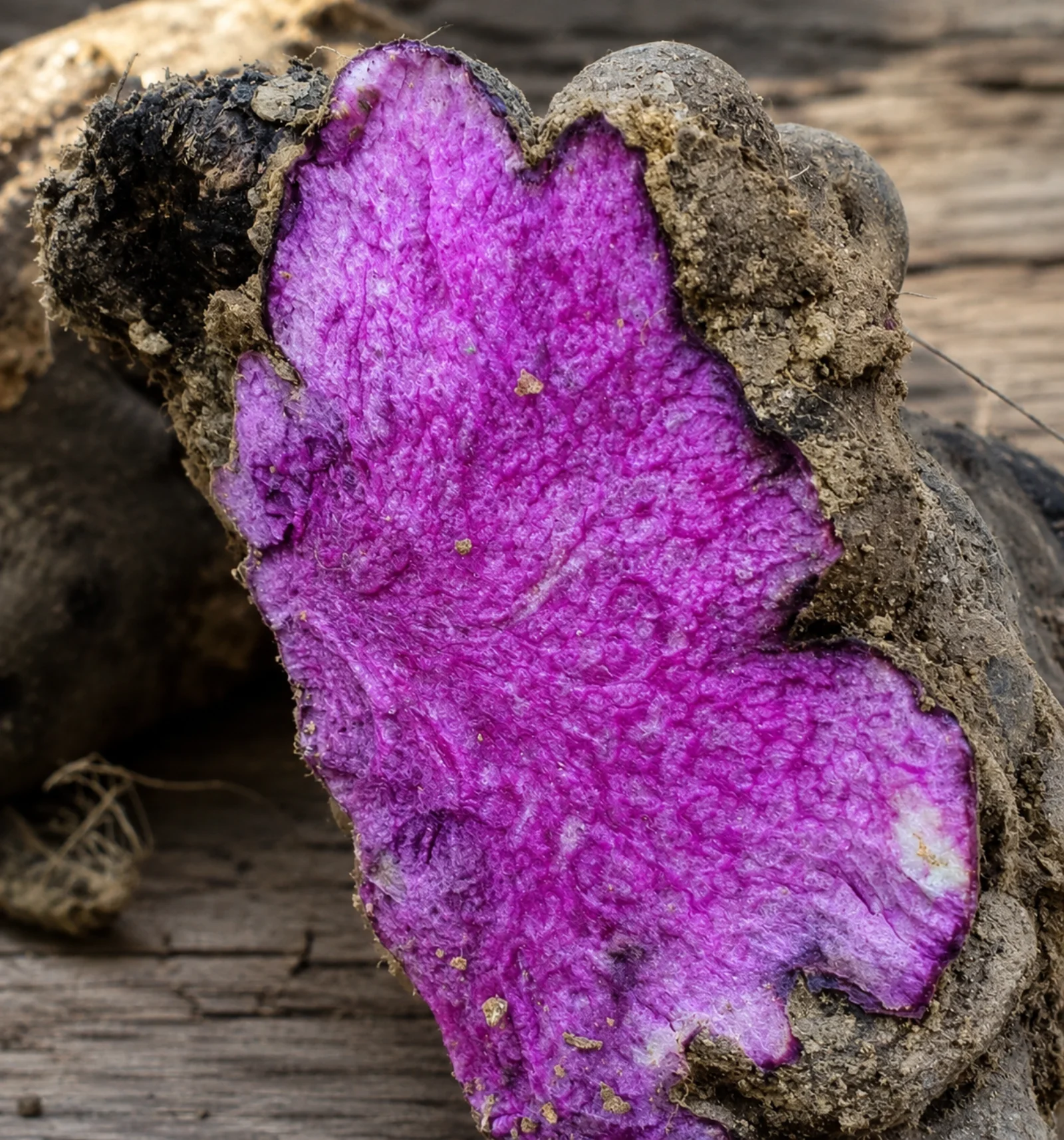
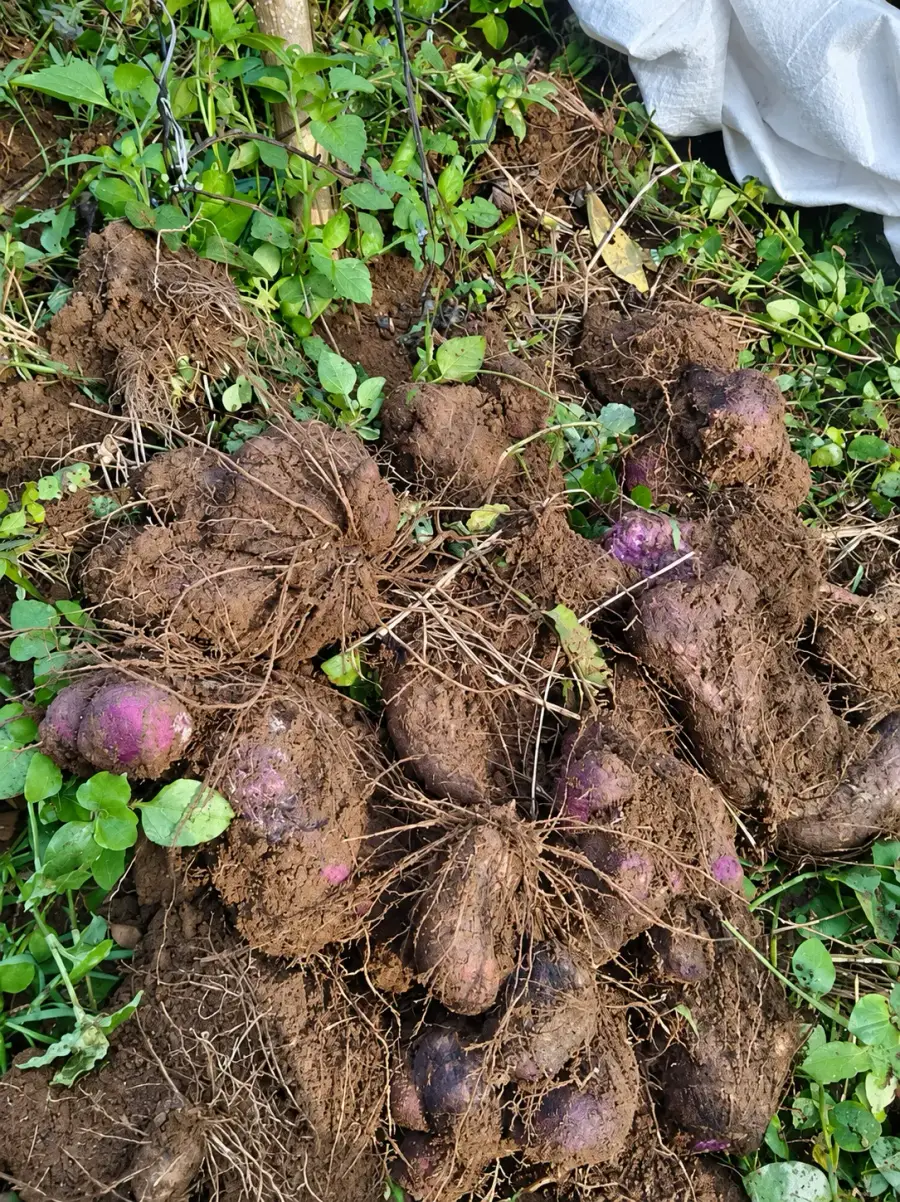
Korean importers should note that ube (Dioscorea alata) is a completely different species from Korean purple sweet potato (자색고구마, Ipomoea batatas). They are not interchangeable. Ube has a distinctive floral, nutty sweetness and a more intense natural purple color. Korean manufacturers sourcing ube are adding a genuinely new ingredient to their product lines, not a variation of something already available domestically.
This distinction matters for product positioning. Korean food media often reaches for the matcha comparison, but ube does not need to follow matcha's path to succeed. It stands on its own: a premium imported ingredient with authentic Philippine origin, not a commodity substitute.
Getting started
If you're a Korean trader, food manufacturer, or distributor interested in importing Philippine ube, contact us with your requirements. We'll provide a quote with pricing, lead times, and the full documentation package needed for MFDS clearance.
You can also visit our Korea supplier page for product specifications, MOQs, and more details on shipping to Korea.
Sources: MFDS (mfds.go.kr), Special Act on Imported Food Safety Control, Korea Customs Service, Philippine Bureau of Plant Industry, ASEAN-Korea Free Trade Agreement.
Frequently Asked Questions
How long does MFDS inspection take for ube imports?
Document-only inspections clear within 1–2 business days. First-time thorough inspections (which include laboratory testing) take 7–15 business days. After establishing an import history with clean results, subsequent shipments may qualify for faster document-only or on-site inspection.
Does ube qualify for reduced tariffs under AKFTA?
Potentially yes. The ASEAN-Korea Free Trade Agreement provides preferential tariff rates for qualifying Philippine food products. The exact rate depends on the HS code classification of the ube product (powder, paste, or fresh). Your Korean customs broker can confirm the applicable tariff rate and AKFTA eligibility.
Can I import ube as a food ingredient without Korean labeling?
B2B food ingredients used in manufacturing (not sold directly to consumers) have less stringent labeling requirements than consumer-facing products. However, you still need Korean-language product descriptions for the import declaration. Consumer-facing products must carry full Korean-language labels complying with the Food Labeling Standards.
What is the minimum order to ship ube to Korea?
Minimum orders for Korean delivery: 100 kg per order for ube powder (Heritage Reserve or Ani), with exceptions made for first-time buyers. Ube paste is available on request — contact us for pricing and logistics. Fresh whole ube is available on special request — contact us for pricing and cold-chain logistics. We also offer sample kits for first-time buyers who want to evaluate the product before committing to a full order.