The Art of Ube Halaya
Why this ancestral recipe cannot be reduced to a 'purple jam'
By Philippine Ube
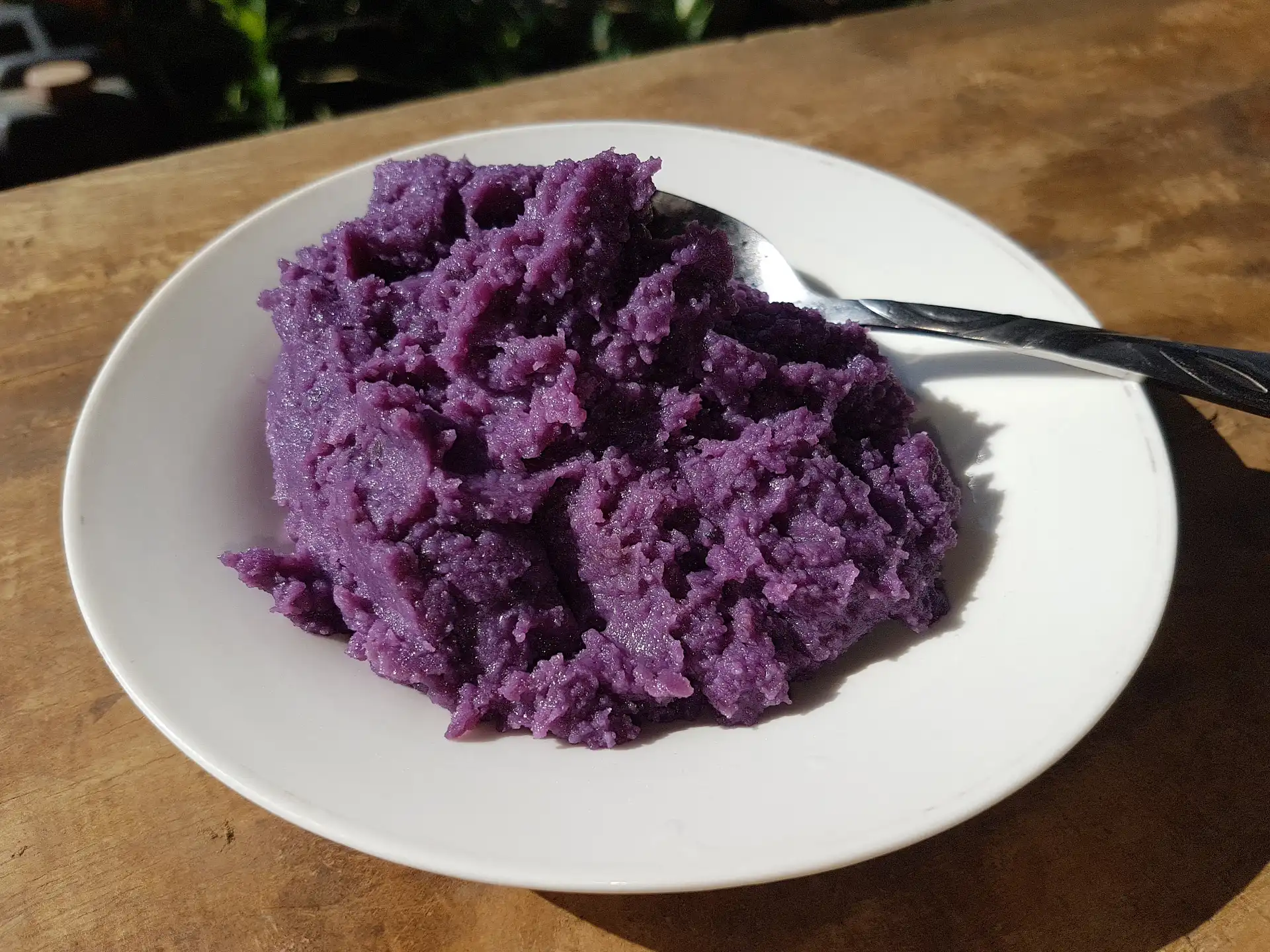
Ube halaya is labor. It's hours of stirring over low heat, a meditation passed down through generations. To call it "purple jam," as many Western food writers do, is to erase the craft, the patience, and the love embedded in every batch.
A Recipe That Tells a Story
Every Filipino family has their version. Some add coconut milk. Some prefer it dense enough to slice. Others make it silky smooth. The variations aren't mistakes. They're signatures, each one carrying the identity of the hands that made it.
My lola's ube halaya took four hours. She'd grate the ube by hand, mix it with fresh carabao milk, and stir without stopping until the mixture pulled away from the sides of the kawa. It was a family event. We'd take turns stirring, and she'd know by sound, not sight, when it was done.
What Gets Lost in Translation
When a recipe blog reduces ube halaya to "purple yam jam, easy 30-minute version," something essential is lost. The shortcut isn't just about time; it's about stripping away the cultural significance of the process itself.