What Cooking Actually Does to Ube: Fresh vs. Boiled, By the Numbers
DOST-FNRI's own composition tables show exactly what boiling costs you nutritionally, and confirm ube's sweetness was never coming from sugar
By Philippine Ube
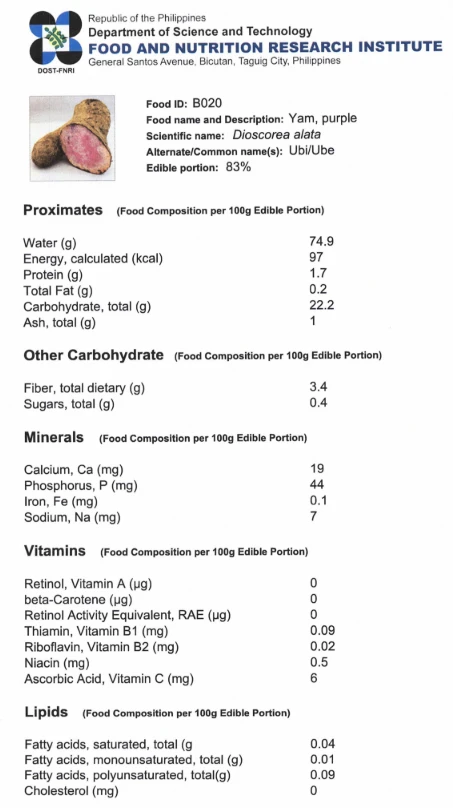
Our ube nutrition facts page covers the raw composition profile from DOST-FNRI in full, along with the anthocyanin chemistry that makes ube's pigment unusual. There is one part of that same government dataset it does not cover: what happens to those numbers once you actually cook the tuber. DOST-FNRI's Philippine Food Composition Tables list a separate entry for boiled ube, and putting it next to the raw entry answers two questions people ask constantly: how much does cooking cost you nutritionally, and is ube actually as sweet as it tastes.
The two entries, side by side
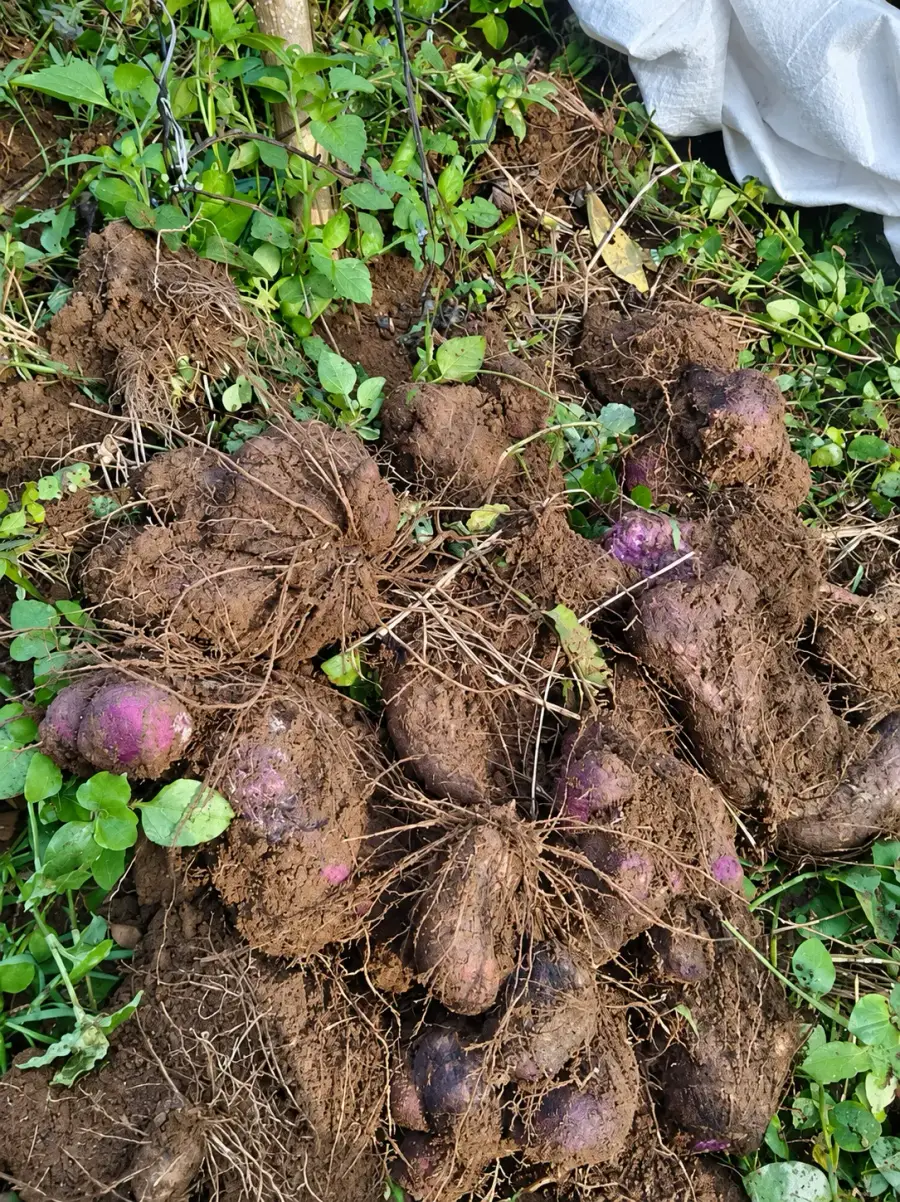
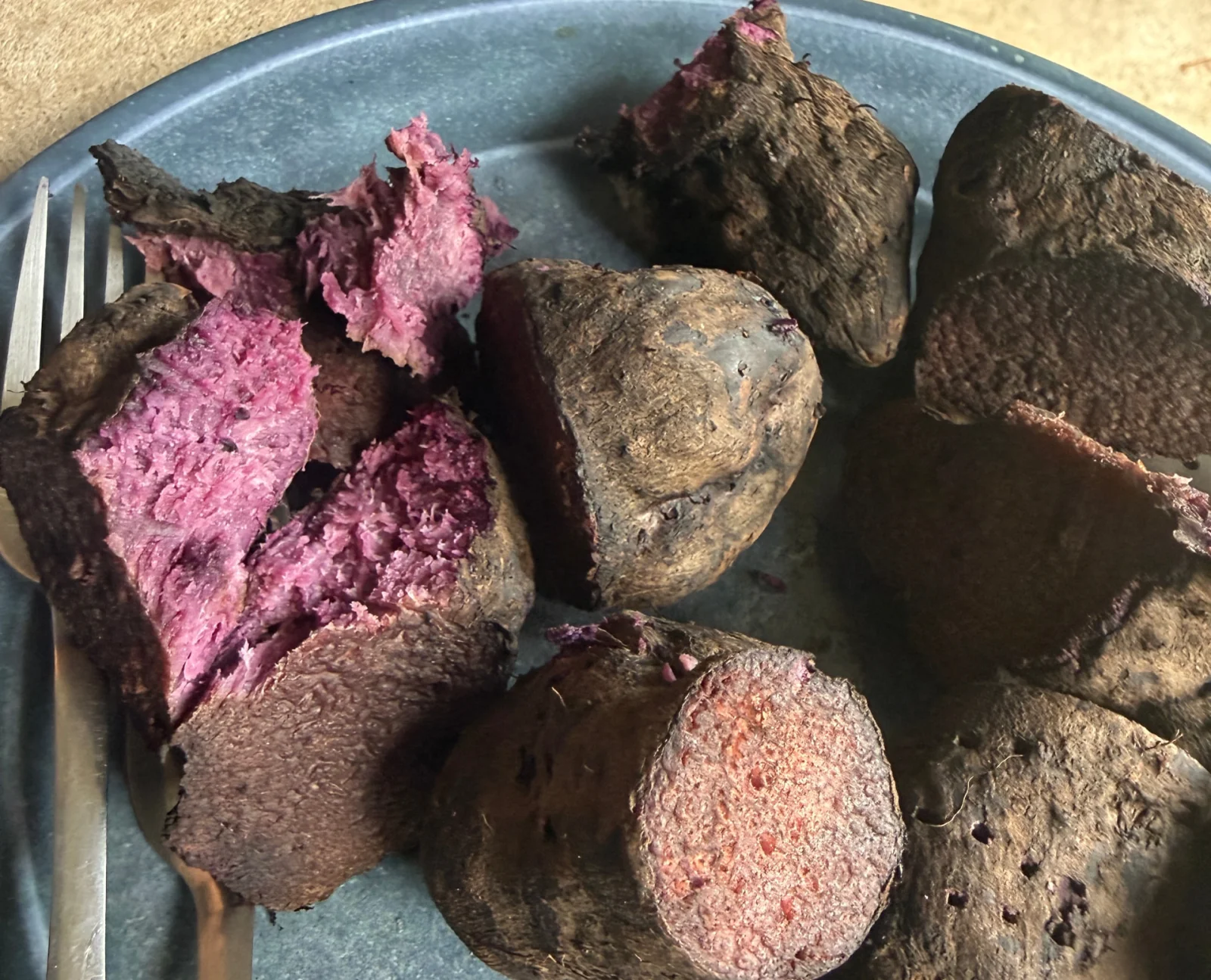
DOST-FNRI's PhilFCT lists ube under Food ID B020 ("Yam, purple," Dioscorea alata, 83% edible portion) for the raw tuber, and B021 ("Yam, purple, boiled," 74% edible portion) for the cooked form. Both are per 100 grams of edible portion.
| Nutrient (per 100g) | Fresh | Boiled | Change |
|---|---|---|---|
| Energy | 97 kcal | 77 kcal | −20.6% |
| Protein | 1.7 g | 0.7 g | −58.8% |
| Fiber, total dietary | 3.4 g | 2.6 g | −23.5% |
| Sugars, total | 0.4 g | 0.3 g | −25.0% |
| Vitamin C | 6 mg | 4 mg | −33.3% |
| Calcium | 19 mg | 10 mg | −47.4% |
| Phosphorus | 44 mg | 23 mg | −47.7% |
| Water | 74.9 g | 80.4 g | +7.3% |
Full raw-tuber nutrient list, including protein, fat, and B-vitamins, on our ube nutrition facts page.
One thing FNRI told us directly, in the same reply that supplied this data: they do not currently hold composition data specific to ube powder, only fresh and boiled whole tuber. Any "ube powder nutrition facts" you see quoted elsewhere is either extrapolated from these tuber figures without saying so, or not sourced to FNRI at all.
Why boiling costs more than "some vitamins"
The pattern across the table is not random. Minerals and vitamin C fall the hardest, 33 to 48%, because they are water-soluble and leach directly into the cooking water. Water content itself rises from 74.9g to 80.4g per 100g, which dilutes every other figure on top of the genuine loss. Protein's 58.8% drop looks dramatic but is partly this same dilution effect rather than protein being destroyed outright. None of this is unique to ube. It is the ordinary cost of wet-heat cooking on any vegetable, just rarely quantified this specifically because rarely does anyone ask the government agency that measures it.
The practical takeaway: steaming or roasting, which do not submerge the tuber in water, will hold onto more of this than boiling does. If you are formulating a product where nutrient retention matters, the cooking method is not a minor detail.
Ube is barely sweet, even before you cook it
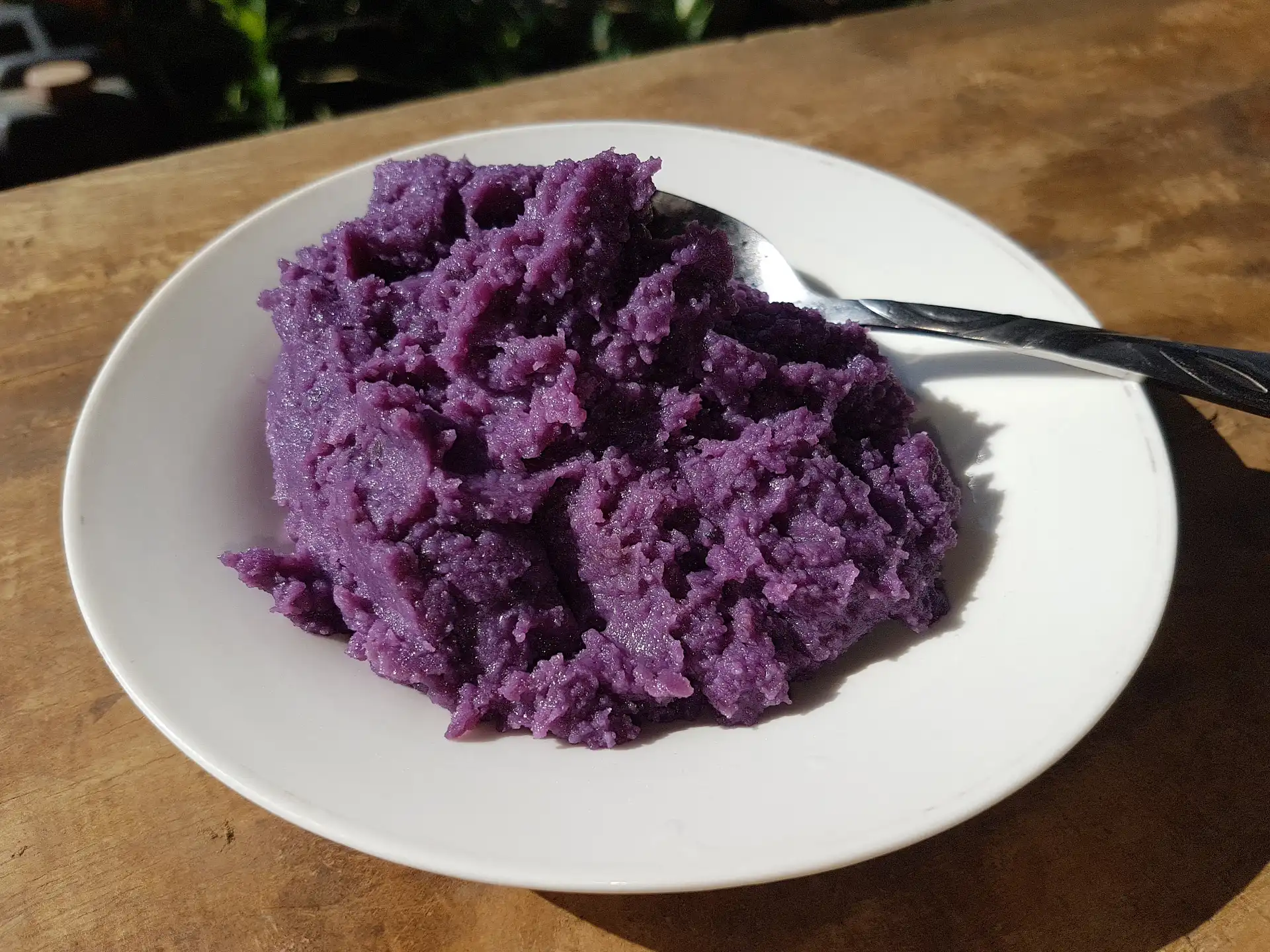
The number worth sitting with is 0.4 grams of total sugar per 100 grams, fresh, dropping slightly to 0.3g boiled. That is a small fraction of what most root vegetables carry, and nowhere near enough to explain why an ube dessert reads as sweet. If an ube latte, ice cream, or halaya tastes sweet, and it usually tastes quite sweet, that sweetness is coming from added sugar, condensed milk, or syrup, not from the tuber.
What people describe as "sweetness" in lightly cooked ube on its own is mostly aroma: a vanilla, toasted-nut character that reads as sweet to the palate without much sugar behind it. We go into that distinction, and what else shapes ube's flavor, in our flavor guide.
Where these numbers come from
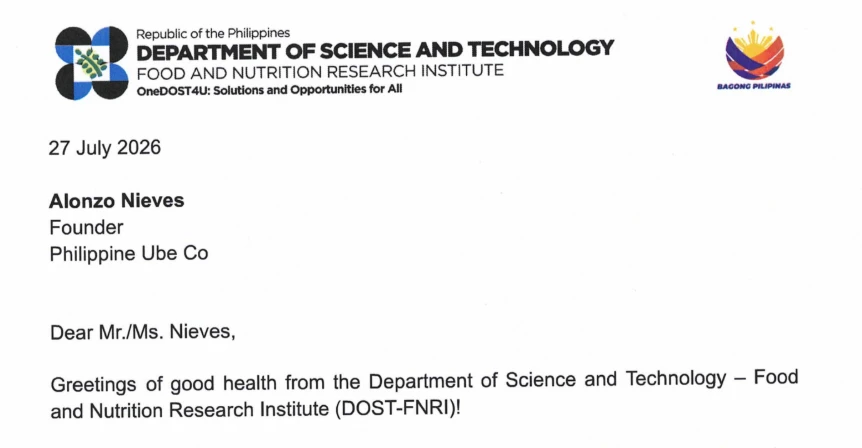
All composition figures in this article are taken directly from the Department of Science and Technology-Food and Nutrition Research Institute's Philippine Food Composition Tables (PhilFCT), supplied to us in writing on 27 July 2026 in response to a direct inquiry. Recommended citation, per FNRI's own request: Department of Science and Technology-Food and Nutrition Research Institute (DOST-FNRI). (2026). Philippine Food Composition Tables (PhilFCT®) Online Database. iFNRI Website. Retrieved from http://i.fnri.dost.gov.ph/fct/library. For the full raw-tuber nutrient panel and the anthocyanin chemistry behind ube's color, see our complete nutrition and science page.
If you are formulating with ube and need composition data your regulatory team can check against a primary source, get in touch and we can point you to the same tables we used here.
Frequently Asked Questions
Is ube high in sugar?
No. According to DOST-FNRI's Philippine Food Composition Tables, fresh ube contains only 0.4 grams of total sugar per 100 grams, and boiled ube contains 0.3 grams. Most of the sweetness people associate with ube desserts comes from added sugar, condensed milk, or syrup rather than the tuber itself.
How many calories does boiling remove from ube?
Fresh ube contains 97 kcal per 100 grams versus 77 kcal boiled, a 20.6% drop, according to DOST-FNRI's Philippine Food Composition Tables. Part of this is genuine loss and part is dilution, since boiled ube also absorbs water, raising its water content from 74.9g to 80.4g per 100g.
Does boiling ube destroy its vitamin C?
A meaningful share of it. DOST-FNRI data shows vitamin C dropping from 6mg to 4mg per 100 grams, a 33% loss, consistent with vitamin C's well-documented water solubility and sensitivity to heat in most boiled vegetables.
Does cooking ube reduce its vitamin C?
Yes. DOST-FNRI's data shows vitamin C dropping from 6 mg per 100 grams fresh to 4 mg per 100 grams boiled, consistent with the water-soluble vitamin C loss seen in most boiled vegetables.
Is there official nutrition data for ube powder?
Not yet. DOST-FNRI confirmed directly to us in writing that they do not currently hold composition data specific to ube powder, only for fresh and boiled whole tuber. Any ube powder nutrition claims you see elsewhere are not sourced to an official Philippine government figure unless stated otherwise.