Authentic Ube Pandesal Recipe (Real Ube Powder, No Extracts)
By Philippine Ube Team
Ube pandesal is a bright purple, uniquely flavored variation of the classic Filipino breakfast roll. This recipe uses real ube powder for color and flavor. No extracts, no food coloring, nothing artificial. The purple comes entirely from the ube itself.
Adapted from Karen's Kitchen Stories, simplified to focus on what matters: real ube, good flour, and patience.
Prep time: 45 minutes | Inactive time: 1 hour 30 minutes | Bake time: 20–25 minutes | Makes: about 16 rolls
Ingredients
For the Ube Paste (Tangzhong-style)
- ¼ cup (60 g) ube powder
- ¾ cup boiling water
For the Dough
- 3½ cups (446 g) bread flour
- 6 tablespoons granulated sugar
- 1 teaspoon salt
- 1½ teaspoons instant yeast
- 1 large egg, room temperature
- 1 cup warm milk (100–110°F / 38–43°C)
- 2 tablespoons neutral oil (canola or vegetable)
For Coating
- ⅓ cup fine bread crumbs
Method
Step 1: Make the Ube Paste
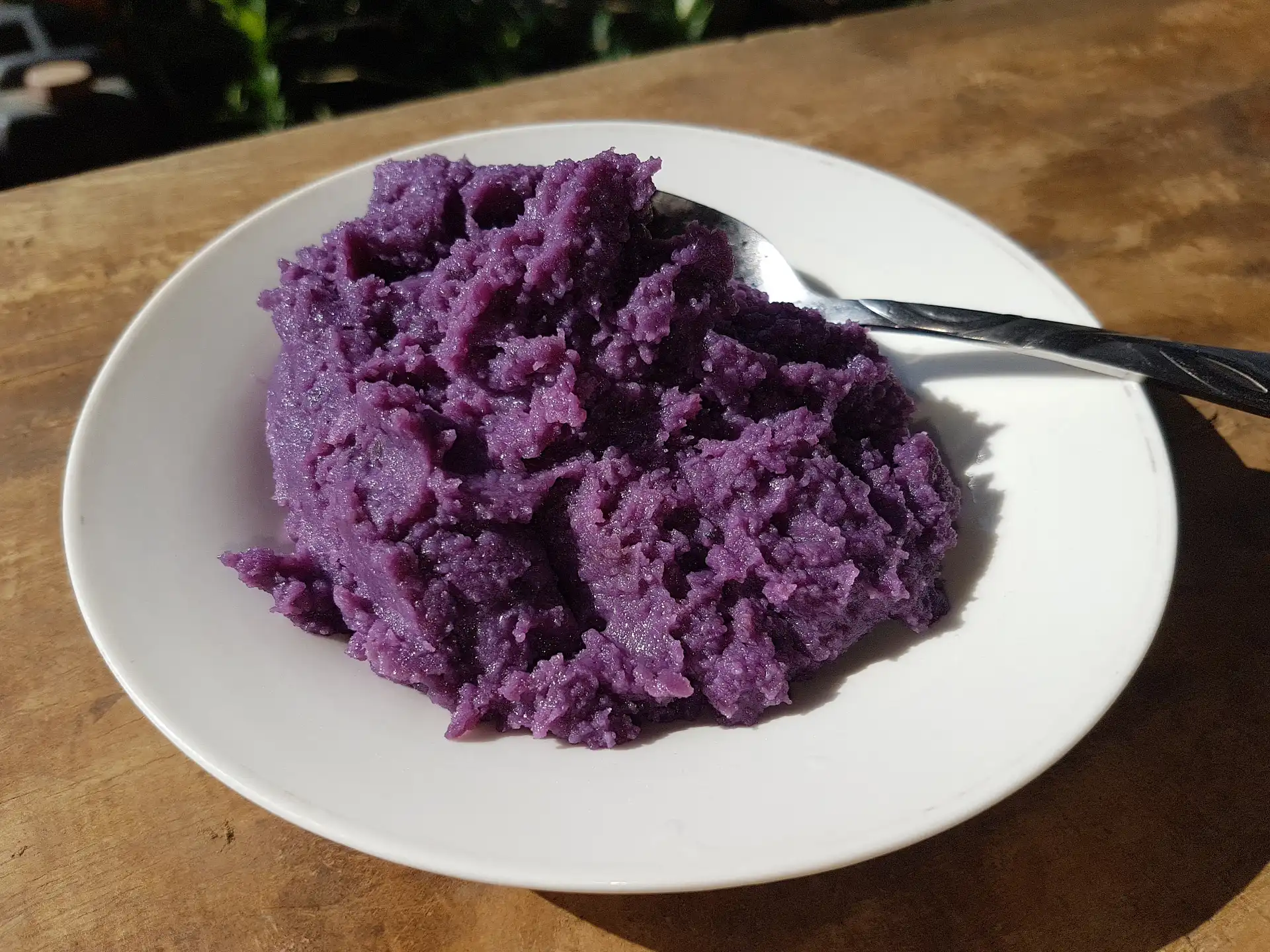
In a small bowl, combine ¼ cup ube powder with ¾ cup boiling water. Stir until smooth. It will form a thick, vivid purple paste. Set aside to cool to room temperature. This step hydrates the ube and intensifies its color before it goes into the dough.
Step 2: Mix the Dough
In a large bowl, whisk together the bread flour, sugar, salt, and instant yeast. In a separate bowl, whisk together the warm milk, egg, oil, and the cooled ube paste until well combined.
Pour the wet mixture into the flour mixture. Stir with a wooden spoon or spatula until a shaggy dough forms and no dry flour remains. The dough will be sticky, and that's correct.
Step 3: Knead
Turn the dough out onto a lightly floured surface. Knead for 10–12 minutes by hand until the dough is smooth, elastic, and springs back when poked. It should feel slightly tacky but not stick to your hands. If using a stand mixer with a dough hook, knead on medium-low for 8–10 minutes.
The dough will be a deep purple. Don't be tempted to add more flour. A slightly wetter dough makes softer rolls.
Step 4: First Rise
Shape the dough into a ball and place it in a lightly oiled bowl. Cover with a damp towel or plastic wrap. Let rise in a warm spot for 1 to 1½ hours, or until doubled in size.
Step 5: Shape the Rolls
Punch down the dough gently. Turn it out onto a clean surface. Divide into 16 equal pieces (about 50–55 g each). Roll each piece into a smooth ball by tucking the edges underneath.
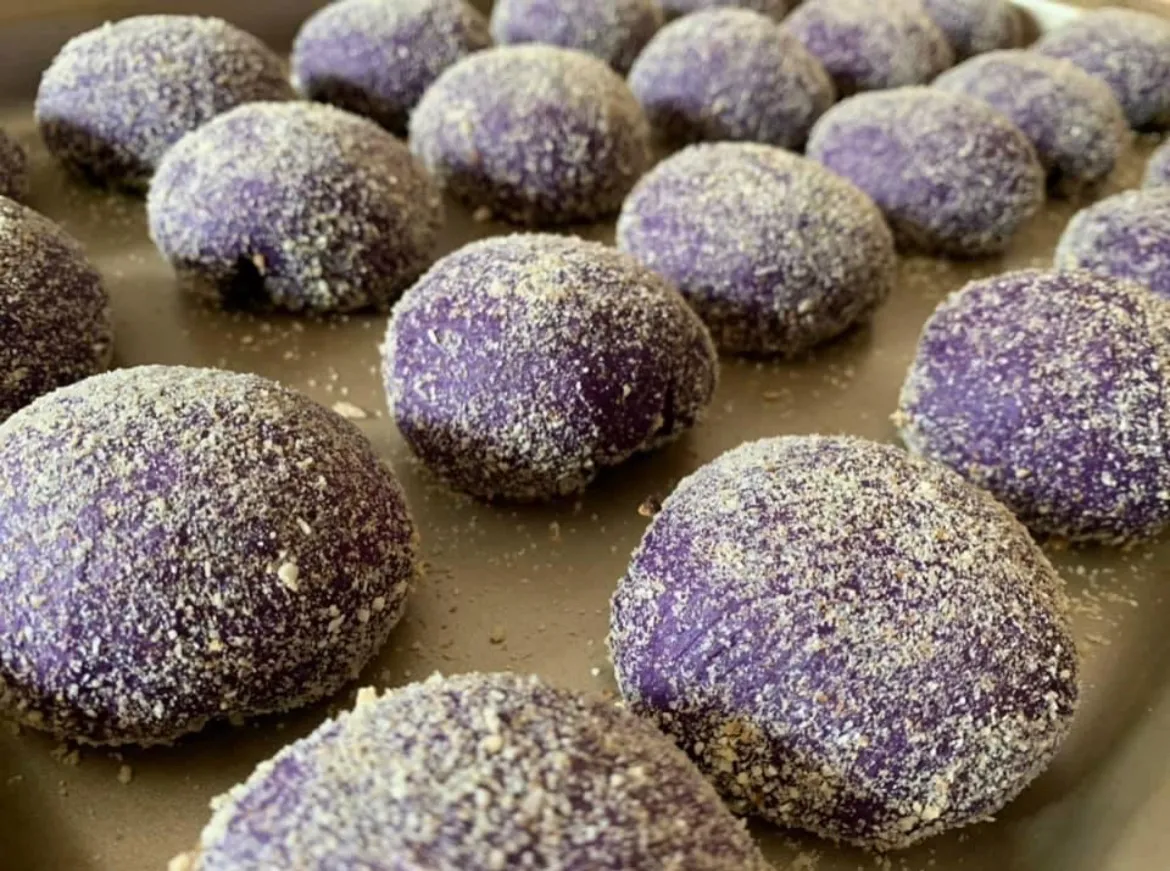
Spread the bread crumbs on a plate. Roll each ball in the bread crumbs until lightly coated on all sides. Place the rolls on a parchment-lined baking sheet, spaced about 2 inches apart.
Step 6: Second Rise
Cover the rolls loosely with a towel. Let rise for 30 minutes, or until puffy and the rolls have nearly doubled.
Step 7: Bake
Preheat your oven to 350°F (175°C). Bake for 20–25 minutes, until the tops are lightly golden and the bottoms sound hollow when tapped. The interior should be cooked through but still soft.
Let cool on a wire rack for 5 minutes before serving.
Tips
- Ube powder quality matters. Use 100% pure ube powder with no added color or sugar. The better the powder, the deeper the purple and the more natural the flavor.
- Don't skip the boiling water step. Hydrating the ube powder first (like a tangzhong) gives you a smoother crumb and better color distribution throughout the dough.
- Milk temperature: Too hot and you'll kill the yeast. Too cold and the dough won't rise. Aim for 100–110°F, warm to the touch but not uncomfortable.
- Storage: Keep in an airtight container at room temperature for up to 2 days, or freeze for up to 1 month. Reheat in a 300°F oven for 5 minutes.
Filling Variations
Once you've mastered the basic roll, try these fillings before shaping:
- Ube Halaya: Flatten each dough ball, place a teaspoon of ube halaya in the center, pinch closed, and roll smooth.
- Cheese: Use a cube of cheddar or cream cheese in the center. The salty-sweet contrast is classic Filipino.
Recipe adapted from Karen's Kitchen Stories: Ube Pandesal Three Ways. Modified to use only real ube powder with no extracts or colorings.
Frequently Asked Questions
What is ube pandesal?
Ube pandesal is the purple ube version of the Filipino breakfast roll pandesal (sometimes spelled 'ube pan de sal'). It uses ube, the Philippine purple yam (Dioscorea alata), worked directly into the dough so the bread is naturally violet and lightly sweet, with the soft, slightly fluffy crumb of classic pandesal.
Can I use ube extract instead of ube powder?
You can, but the result is not authentic ube pandesal. Ube extract is mostly artificial flavor and food coloring. Real ube powder gives you natural anthocyanin purple, and the nutty, vanilla-like flavor that defines genuine Filipino ube bread. If you want true ube pandesal, use 100% real ube powder.
Why is my ube pandesal not purple enough?
Three usual causes: (1) the ube powder is diluted with sweet potato or contains very little ube, (2) you skipped the boiling water 'paste' step that blooms the color, or (3) you added flour during kneading and over-diluted the dough. Use 100% pure Philippine ube powder, hydrate it first with boiling water, and resist adding extra flour.
How much ube powder do I need per loaf of pandesal?
This recipe uses ¼ cup (60 g) of ube powder for about 16 rolls. For a deeper color and stronger flavor, you can push it to 75–80 g, but increase the boiling water proportionally so the dough hydration stays the same.
What ube powder do Filipino bakeries use for commercial pandesal?
Commercial Filipino bakeries running ube pandesal at scale use 100% spray-dried ube powder sourced directly from Philippine farms (varieties like Kinampay from Bohol). It rehydrates evenly, holds color through baking, and keeps a consistent shade across batches. If you're producing ube pandesal commercially, see our bakery sourcing guide.
Can ube pandesal be frozen?
Yes. Cool the rolls completely, then freeze in an airtight bag for up to one month. Reheat from frozen in a 300°F oven for 6–8 minutes. The crumb stays soft and the color holds.