Ube Leche Flan: The Fusion Dessert That Honors Two Filipino Traditions
By Philippine Ube
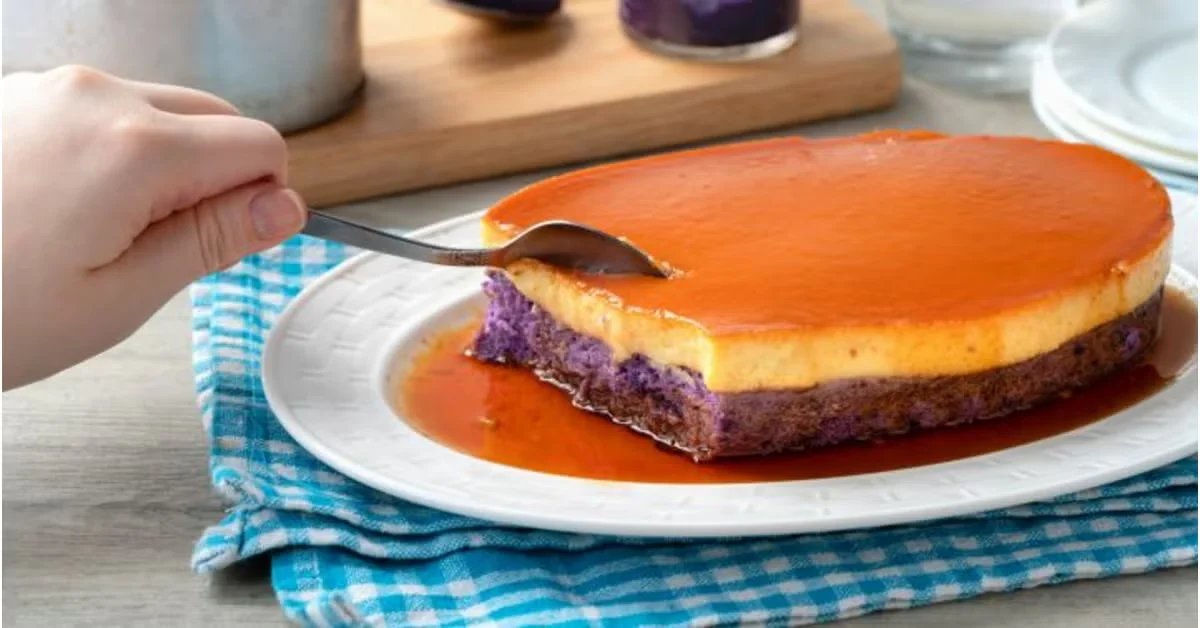
Ube leche flan is the dessert equivalent of a family reunion. It brings together two of the Philippines' most celebrated sweet traditions into a single, layered creation. The bottom layer is rich, custardy leche flan with caramelized sugar. The top layer is dense, creamy ube halaya. When sliced and inverted, the golden caramel cascades over vivid purple, and every bite delivers the best of both worlds.
This recipe is the traditional method used in Filipino households for fiestas, birthdays, and Noche Buena celebrations. It requires patience, particularly during the steaming process, but the result is worth every minute.
A meeting of two traditions
Ube halaya is the Philippines' indigenous purple yam dessert, with roots stretching back centuries to pre-colonial cultivation of Dioscorea alata. Leche flan, the Filipino version of crème caramel, arrived with Spanish colonial influence, adapting European custard traditions with local ingredients (calamansi zest instead of vanilla, coconut milk alongside dairy).
The fusion of these two desserts into a single layered creation is a distinctly Filipino innovation that honors both heritages. It has become a centerpiece of Filipino celebrations, served at birthdays, weddings, and major fiestas.
Recipe: Ube Leche Flan (serves 10–12)
For the caramel
- ¾ cup (150g) white granulated sugar
- 3 tablespoons water
For the leche flan layer
- 12 egg yolks (from large eggs)
- 1 can (300ml) sweetened condensed milk
- 1 can (370ml) evaporated milk
- 1 teaspoon vanilla extract
- 1 teaspoon calamansi or lemon zest (optional, traditional)
For the ube halaya layer
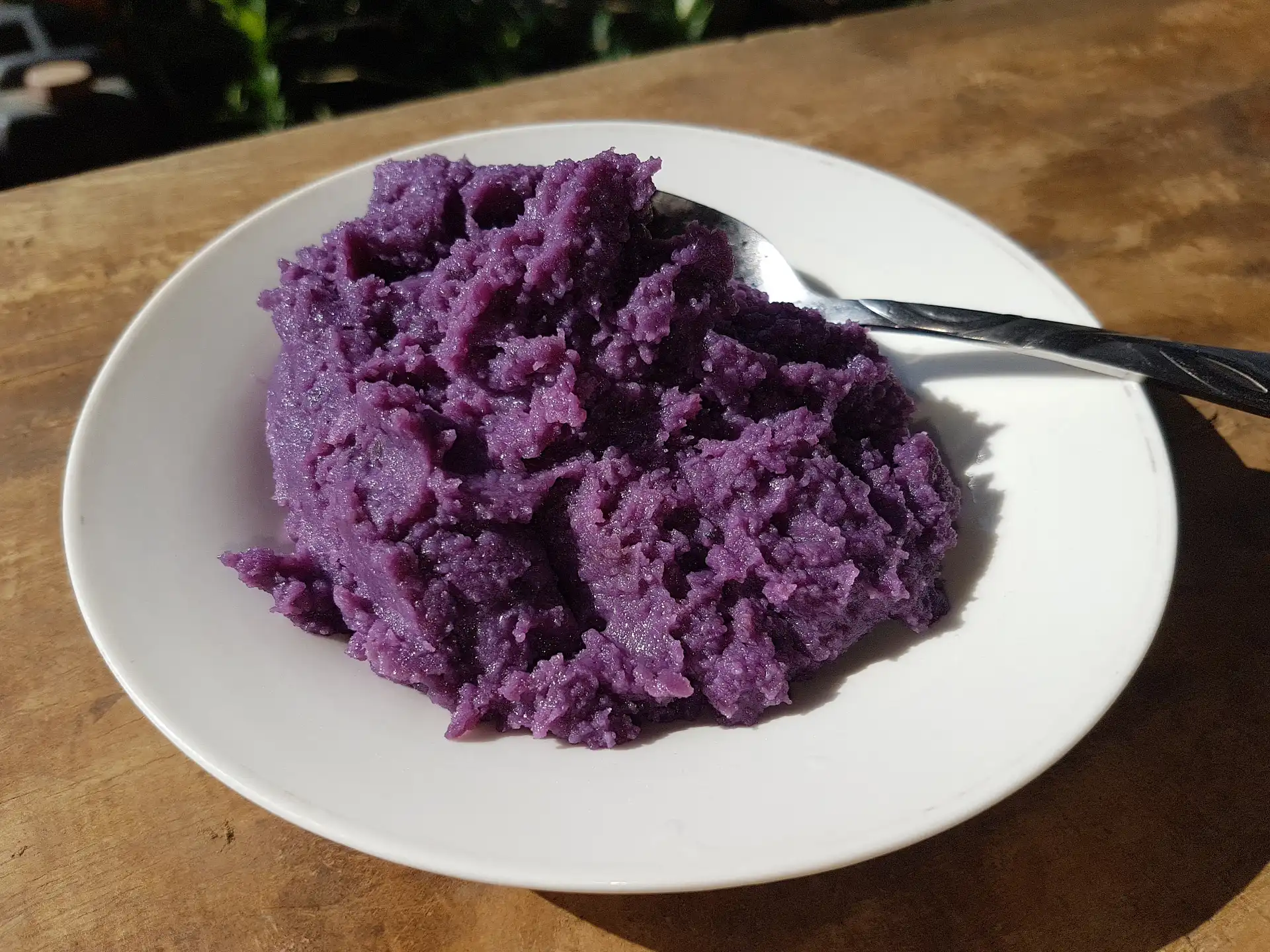
- 500g freshly made ube halaya (or use 100g ube powder rehydrated with 200ml coconut milk, cooked with 100g sugar and 50g butter)
- ½ can (150ml) sweetened condensed milk
- 2 tablespoons butter, softened
Method
Step 1: Make the caramel. In a small saucepan, combine sugar and water over medium heat. Swirl the pan gently (do not stir) until the sugar dissolves and turns amber-gold, approximately 5–7 minutes. Immediately pour the caramel into a 9-inch (23cm) llanera or round baking pan, tilting to coat the bottom evenly. Work quickly; caramel hardens fast. Set aside to cool.
Step 2: Prepare the leche flan mixture. In a large bowl, whisk egg yolks until smooth. Add condensed milk, evaporated milk, vanilla, and zest. Whisk gently until combined. Important: Mix gently to avoid incorporating air bubbles, which create holes in the finished flan. Strain the mixture through a fine-mesh sieve to remove any chalazae or unmixed yolk.
Step 3: Pour the flan layer. Carefully pour the strained custard mixture over the cooled caramel in the llanera. The layer should be approximately 3–4cm deep.
Step 4: Prepare the ube layer. If using pre-made ube halaya, warm it slightly and mix with condensed milk and butter until smooth and spreadable. If making from powder: combine ube powder with coconut milk in a saucepan, cook over medium-low heat stirring constantly for 10 minutes, then add sugar and butter, continue cooking until thick and smooth (about 15 minutes more).
Step 5: Add the ube layer. Gently spoon the ube halaya mixture over the custard layer. Do not press down or stir. The layers should remain separate. Smooth the top with a spatula.
Step 6: Cover and steam. Cover the llanera tightly with aluminum foil to prevent water from dripping into the dessert. Place in a steamer over boiling water. Steam for 45–60 minutes on medium heat. The flan is done when a toothpick inserted into the flan layer comes out clean. Alternatively: Bake in a water bath (bain-marie) at 170°C (340°F) for 50–60 minutes.
Step 7: Cool and unmold. Remove from steamer and let cool to room temperature. Refrigerate for at least 4 hours (overnight is best). To unmold: run a thin knife around the edges, place a serving plate over the llanera, and invert quickly. The caramel will flow down over the purple ube layer.
Tips for a perfect ube leche flan
- Egg yolks only. Traditional Filipino leche flan uses only yolks (no whites) for an ultra-dense, rich custard. Do not substitute whole eggs; the texture will be wrong
- Strain the custard. Straining removes any lumps and ensures a glass-smooth flan surface
- Low, even steam. Too-vigorous boiling creates bubbles in the custard. Keep the steamer at a steady, moderate simmer
- Tight foil cover. Any condensation dripping into the flan creates surface pitting. Double-foil if needed
- Use real ube. Artificial ube flavoring or purple sweet potato produces an inferior color and flavor in the halaya layer. The visual contrast between golden caramel and vivid natural purple is what makes this dessert spectacular
- Refrigerate overnight. The flavors meld and the texture firms optimally after 8–12 hours of refrigeration
Sources
- Philippine culinary heritage and traditional family recipes from Bohol and Pampanga provinces
- DOST-ITDI: Food technology guidelines for traditional Filipino dessert processing
Frequently Asked Questions
How long does ube leche flan last in the fridge?
Properly covered and refrigerated, ube leche flan lasts 5–7 days. For best texture and flavor, consume within 3 days. Do not freeze, as freezing damages the custard texture.
Can I use ube powder instead of fresh ube for the halaya layer?
Yes. Rehydrate 100g ube powder with 200ml coconut milk, cook with 100g sugar and 50g butter over medium-low heat for 25 minutes until thick and smooth. This produces a halaya layer comparable to fresh ube.
Why did my leche flan have bubbles or holes?
Bubbles are caused by either whisking too vigorously (incorporating air) or steaming at too high a temperature. Mix the custard gently, strain it through a sieve, and steam at a moderate simmer rather than a rolling boil.
Can I bake instead of steam ube leche flan?
Yes. Place the llanera in a larger pan filled with hot water to create a water bath (bain-marie), and bake at 170°C (340°F) for 50–60 minutes. The water bath provides gentle, even heat similar to steaming.