What's Actually in a Kilo of Real Philippine Ube
By Philippine Ube
If you have been quoted on ube powder from three suppliers in the last month, you have probably seen three very different numbers. Ours is almost always the highest. We are comfortable with that, and if you are reading this, you are probably trying to work out whether the gap is justified or whether you are being asked to subsidise a brand story.
Fair question. Here is the honest answer.
Real Philippine ube (Dioscorea alata) costs more than the alternatives because the entire supply chain behind it sits in the Philippines, and every stage of that chain is paid properly. We do not outsource cultivation to cheaper countries, we do not use purple sweet potato as a filler, we do not buy from traders who cannot tell us which farm a sack came from. That costs money. It also produces a product that actually performs the way real ube is supposed to perform — which, if you are putting it into a bakery line, ice cream, or retail SKU, is probably why you came looking in the first place.
What "entire supply chain in the Philippines" actually means
Most of the "Philippine ube" sold internationally is not really Philippine. Somewhere along the way, the Philippines becomes a line on a marketing page rather than a physical place where something happened. Ours is not marketing. The chain is literal.
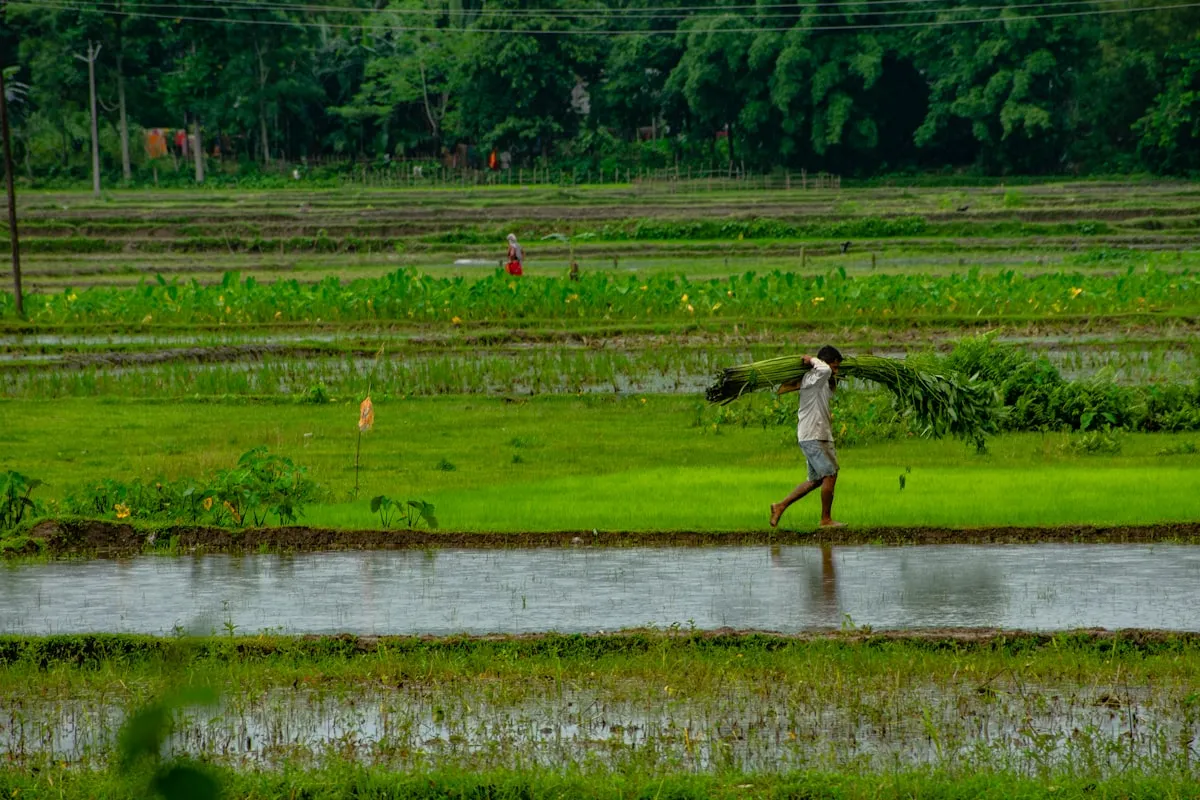
- Farm. The tuber is grown in the Philippines, primarily in Bohol and the wider Visayas region. Named farms. Named farmers. We know the cultivar, the planting date, and who harvested it.
- Post-harvest handling. Cleaning, sorting, and moisture control happen in local facilities within hours of lifting, not in a container weeks later.
- Processing. Cutting, drying, and milling into powder, or cooking and jarring for halaya, all happens in Philippine facilities. The people on the line are Filipino. The equipment is in the Philippines. The electricity bill is paid in pesos.
- Quality control. Species identification, moisture, microbiology, and particle-size checks are done before the product leaves the country.
- Packaging. Export-compliant packaging — English labels, lot codes, nutritional panels, allergen declarations — is finished in the Philippines.
- Export logistics. Consolidation and freight forwarding happens from Philippine ports.
Every one of those steps adds cost. Every one of those steps also adds something real — traceability, species verification, consistent quality, and income that stays in the country that originated the crop.
Compare that to a "ube powder" that was grown in one country, dried in another, rebagged in a third, and sold under a Filipino-sounding brand name. That product might be cheaper per kilo, but almost none of the value lands in the Philippines, and you usually cannot even confirm what species is in the bag. We wrote a longer piece on this problem in Why It Is So Hard to Source Real Ube Powder From the Philippines if you want the full picture.
The cost stack, honestly broken down
When you buy a kilo of our powder, you are paying for the following. No single line is dramatic. Added together, they explain the gap.
1. A fair farmgate price
Commodity ube moves through layers of local traders and provincial wholesalers. By the time a farmer gets paid, they are typically receiving around ₱40 to ₱60 per kilogram of fresh tuber. That is not a living wage for the work involved — planting, tending for eight to ten months, hand-harvesting, hauling. We cover this in detail in Farmers of the Visayas and in our farmgate pricing data.
We pay meaningfully above commodity rates and buy directly, which cuts out two to three middleman layers. Our farmer partners receive a price that actually makes planting ube a rational economic choice rather than a labour-of-love crop they subsidise with other income. That line alone is a sizeable slice of the gap between our price and the cheapest "ube" on the market.
2. Properly paid Filipino labour at every stage
Cleaning, peeling, slicing, drying, milling, QC, packing. Each of those steps is done by someone who is paid a fair wage, with benefits, in a certified facility. This is not a minor line. A lot of cheap ube powder is cheap specifically because someone, somewhere, is not being paid what they are owed, or because the facility is cutting corners on food safety to save cost.
3. Cold chain and post-harvest losses
Ube is a living tuber. It respires. It loses moisture. It rots if you get the post-harvest window wrong. Keeping the quality window intact — temperature, humidity, timing from field to processing line — is a cost most commodity traders skip because they can afford to lose a percentage of the lot. We cannot afford to lose it, because every lot has named origin and we have already committed to the farmer's price.
4. Real species and lab verification
Every batch that leaves our facility has a Certificate of Analysis. Species verification confirms Dioscorea alata, which matters because most of the world's "ube" is actually Ipomoea batatas (purple sweet potato) or Colocasia esculenta (taro). Lab testing costs money, and many suppliers skip it precisely because it would reveal what they are actually selling. If you have ever tried to get a straight species answer out of a supplier and received a long silence in return, you already know how common this is.
5. Export-ready compliance
Philippine FDA registration. Shelf-life studies. Nutritional panels. Allergen declarations. Lot-coded packaging. Export documentation. None of that appears by magic. We treat it as the cost of doing business, which is why our product can actually clear customs and sit on a regulated shelf in the USA, Canada, Korea, or the EU. We documented what this looks like for buyers in From Soil to Shelf.
6. Export logistics from Philippine ports
Freight, consolidation, insurance, and origin paperwork all priced from Manila or Cebu. This is structural, not optional. If the product did not start in the Philippines, this line would not exist — which is part of how cheaper "Philippine" ube products get their price down.
Why the cheaper ube you have been offered is usually not ube
This is the part of the conversation where we disappoint people who wanted us to match a quote from elsewhere. We cannot, and we will not, because we know what is almost always in that cheaper bag.
Purple sweet potato relabelled as ube. Ipomoea batatas is a different plant. Different genus, different family, different flavour, different performance in a formulation. It is the most common substitution because it is dramatically cheaper to grow and shares a purple appearance. Do not use appearance to verify authenticity — plenty of real ube is lighter in tone, plenty of fakes hit the expected purple perfectly, and dye closes any remaining gap. Species is the only test that matters, and species is verified on paper, not by eye.
Taro relabelled as ube. Colocasia esculenta is a corm from a different plant family entirely. It shows up in a lot of "ube" drinks and desserts in the USA, sometimes with added colouring. We unpacked this in Ube vs. Cultural Appropriation and in Ube vs. Purple Sweet Potato vs. Taro.
Real ube, grown outside the Philippines. Dioscorea alata does grow in other tropical countries. The species is technically correct. What you lose is the cultivar (Kinampay and other Bohol heirloom varieties do not exist outside the Philippines), the flavour profile that Filipino consumers recognise, and the cultural and economic connection to the origin country. You also lose the ability to market the product as authentically Filipino, which is usually the point of buying ube in the first place.
Real Philippine ube, laundered through a foreign middleman. Tuber gets grown in the Philippines, exported raw, processed in a lower-cost country, and sold back to the market as "Philippine ube powder." The species might be real. The origin line is technically true. But the Filipino farmer gets the commodity farmgate price, the processing jobs are not Filipino, and the margin sits with the foreign processor. This is the category that frustrates us the most, because it cannibalises the industry without even delivering a clearly fake product.
What the premium actually buys you
If you are running a bakery, an ice cream line, a beverage SKU, a private-label product, or a retail brand, here is what that extra margin translates into on your side of the invoice.
- A product that actually tastes like ube. Real Kinampay and Bohol-native cultivars have a flavour profile — nutty, vanilla-adjacent, slightly earthy — that purple sweet potato and taro simply do not produce. If your customers have had real ube in the Philippines or at a Filipino-owned bakery, they will notice the difference. Flavour comes out more when you cook ube with fat, which we cover on our ube flavour method page.
- Consistent performance from batch to batch. Traceable origin and named cultivars give you consistent colour, flavour, and hydration behaviour. You can actually dial in a recipe and have it hold from order to order.
- Paperwork that clears regulated markets. COAs, FDA registration, allergen declarations, and nutritional panels ready to hand to your distributor, your co-packer, or the FDA inspector who turns up at the warehouse.
- A story you can actually tell on your packaging. "Sourced directly from Filipino farmers in Bohol" is a defensible claim on your product if it is true. If you source from us, it is true, and we can back it up with documentation. If you source from a bargain-bin supplier, making the same claim is a marketing risk and, in some jurisdictions, a legal one.
- Alignment with where the market is going. Ube was named 2024 Flavor of the Year. Retailers and consumers are rapidly getting more sophisticated about authenticity, origin, and labelling. Cheap "ube" that turns out to be taro plus dye is the kind of thing that gets written up in food journalism and pulled from shelves. Real product is the safer long-term bet.
The matcha lesson, not the matcha path
We use this comparison a lot because it is the cleanest one. Japanese matcha is expensive. Buyers accept that it is expensive. They accept it because Japan protects the category through origin labelling, producer cooperatives, and national branding, and because the market has agreed that "matcha" means Japanese green tea powder processed a specific way. Everyone in the value chain — from the tea farmer in Uji to the café in Brooklyn — benefits from that agreement.
The lesson is not that ube should become matcha. Ube does not need to be like matcha to succeed. The Philippines already has the origin story, the cultivar diversity, and the cultural weight, and ube's own path looks nothing like green tea powder's. What matcha proves is that a country can own a category on its own terms. What ube has lacked is the infrastructure that turns a commodity crop into a premium category with enforced authenticity. That infrastructure has to be built. Every kilo that goes out of our facility at a price that reflects the true cost of doing this properly is part of building it.
If the market keeps buying the cheapest "ube" on the shelf, the category never develops, farmers never earn more than the commodity floor, and the flavour of the year quietly becomes the disappointment of the year. If enough buyers pay for the real thing, the category scales and eventually the premium compresses — but only because the floor has risen, not because the work got easier.
How to verify what you are buying (without relying on colour)
Colour is the least useful signal when you are trying to verify ube. Real ube varies in hue by cultivar and growing conditions. Fake ube hits the "right" purple because someone chose it. Ask your supplier these questions instead.
- Species. Can you confirm in writing that this is Dioscorea alata? Can I see a COA?
- Origin. Which province? Which municipality? Which farm or cooperative? The more specific the answer, the more real the supply chain.
- Cultivar. Is this Kinampay, a Bohol native, or unspecified? Unspecified is acceptable for commodity-grade use, but you should know.
- Processing location. Where is the tuber dried and milled? If the answer is not the Philippines, you are not buying Philippine ube — you are buying ube that passed through the Philippines.
- Farmer payment model. Direct, cooperative, or through traders? Willingness to answer this question honestly tells you a lot about the rest of the chain.
- Certifications. FDA registration and export documentation. If a supplier cannot show these, they cannot sell into regulated markets, and your co-packer or distributor will eventually hit a wall.
If a supplier cannot answer these questions, or answers them with vague reassurances instead of documents, you are not buying what you think you are buying. The price is low because the substance is low.
What this means for your product
You do not have to source from us. There are a handful of other Philippine-based suppliers who are doing this work properly, and we would rather see you with one of them than with a laundered foreign product. What matters is that you understand what the premium is actually for, and that the "expensive" price is the real price — the cheap price is what happens when something has been left out.
If you would like to talk about specs, MOQs, documentation, or sampling, contact us and we will send a product sheet and pricing. If you would like to see how we grade what we sell, read Why We Grade Our Ube.
Ube is worth paying for. It has been worth paying for since before anyone outside the Philippines had heard of it. The global market is finally catching up. We think the premium should follow the value.
Frequently Asked Questions
Why is Philippine ube more expensive than ube from other countries?
Because the entire supply chain — farm, post-harvest handling, processing, milling, packaging, QC, and export — happens inside the Philippines, and every stage is paid fairly. Cheaper alternatives typically outsource one or more of those stages to lower-cost countries, or use non-ube species like purple sweet potato or taro that are much cheaper to grow. You are paying for real Dioscorea alata, named-farm origin, Filipino wages at every step, and real lab and compliance documentation.
Is Alibaba ube powder cheaper because it is the same product?
No. Most ube-labelled products on Alibaba and similar wholesale platforms are purple sweet potato powder (Ipomoea batatas), not Dioscorea alata, or are blended products with only a small percentage of real ube. The species is different, the flavour is different, and the country of origin is usually not the Philippines. The price is low because the product is not what the label implies.
How do I verify I am buying real Philippine ube and not a substitute?
Do not rely on colour, because real ube varies in hue and fake products hit the expected purple easily with dye or naturally-purple substitutes. Instead, ask for a Certificate of Analysis confirming Dioscorea alata, ask for the specific farm or cooperative of origin, ask where the product was processed and packaged, and ask for export compliance documents (FDA registration, nutritional panel). A supplier who cannot answer those questions in writing is not a safe sourcing decision.
What percentage of the retail price usually reaches the farmer?
In commodity ube supply chains, the farmer typically captures around 5 to 8 percent of retail value, receiving roughly ₱40 to ₱60 per kilogram of fresh tuber at the farmgate. Direct-sourcing models like ours pay meaningfully above that rate and cut out two to three intermediary layers, so a larger share of what the buyer pays actually reaches the person who grew the crop.
Is Kinampay ube the same as other Philippine ube?
Kinampay is a specific heirloom cultivar of Dioscorea alata native to Bohol, prized for flavour intensity and cultural significance. Other Philippine ube cultivars are also Dioscorea alata but differ in flavour profile, colour, and quality characteristics. When a supplier cannot specify a cultivar, you are buying commodity-grade ube, which is not inherently bad but should be priced and positioned accordingly.
Can I source Philippine ube cheaper by buying fresh tuber instead of powder?
In theory, yes, but the total landed cost after import logistics, phytosanitary inspection, cold chain, and yield losses usually exceeds the cost of buying properly processed powder or paste. Fresh tuber is also highly perishable and requires you to run the drying and milling process yourself, which most bakeries and manufacturers are not set up for. Powder exists because it solves real logistics problems that raw tuber creates.
Why does the same powder vary in purple intensity between batches?
Real ube colour varies by cultivar, growing conditions, harvest timing, and post-harvest handling. A perfectly uniform purple across every bag is actually a warning sign — it usually means colour has been stabilised with additives or that the product is not Dioscorea alata. Our batches are consistent in species and origin, but natural colour variation is a feature of real ube, not a defect.